
Reviews
Sequence Sprint succeeds where many educational games fall short: it makes learning feel like play. The puzzles start simple enough for children to grasp quickly, yet the later sequences will challenge adults. The visual feedback of moving a vehicle forward provides clear motivation without overwhelming the player. Cross-platform accessibility means it works on any device, and the lack of ads or purchases keeps the experience focused. This is a solid choice for parents seeking screen time that builds real skills.
About this game
Core Gameplay Loop
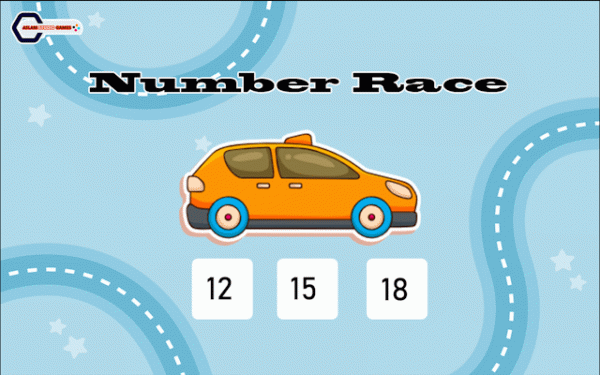
Sequence Sprint presents players with a series of number sequences displayed on screen. Each round shows a pattern with a missing element. Players must identify the correct number that completes the sequence, selecting from multiple choice options. A correct answer advances the player's vehicle along a straight track toward the goal. The game blends quick thinking with careful analysis, rewarding accuracy over speed.
Pattern Variety & Difficulty Curve
The puzzles start with simple arithmetic progressions, such as adding or subtracting a constant value. As players progress, patterns incorporate multiplication, division, and alternating operations. Later stages introduce more complex sequences that require recognizing geometric progressions or multi-step rules. This gradual increase in complexity ensures that beginners can build confidence while experienced players remain challenged.
Visual Design & Accessibility
The interface uses bright, clean graphics with a clear focus on the puzzle display. Numbers are large and easy to read, and the vehicle animation provides satisfying visual feedback for correct answers. The game runs smoothly on both desktop computers and mobile devices, requiring no downloads or installations. This cross-platform compatibility makes it convenient for quick play sessions during breaks or longer practice periods at home.
Educational Value & Skill Development
Sequence Sprint reinforces fundamental math concepts through repeated practice. Players strengthen their ability to recognize numerical relationships, identify patterns, and apply logical reasoning. The game encourages systematic thinking: rather than guessing, players learn to analyze each sequence step by step. These skills transfer to classroom mathematics and real-world problem solving. The competitive element adds motivation without creating pressure, as the focus remains on solving puzzles correctly.
Tips for Steady Improvement
New players benefit from starting with easier levels to understand the game's rhythm. Taking time to examine each sequence before selecting an answer reduces mistakes. Regular practice helps build pattern recognition speed naturally. For challenging puzzles, writing down intermediate steps on paper can clarify the rule. Staying calm and methodical leads to better performance than rushing through problems.








Comments
Sign in to leave a review
No account? Create one
No comments yet.